
AC Running but Not Cooling in a Humid Michigan Summer
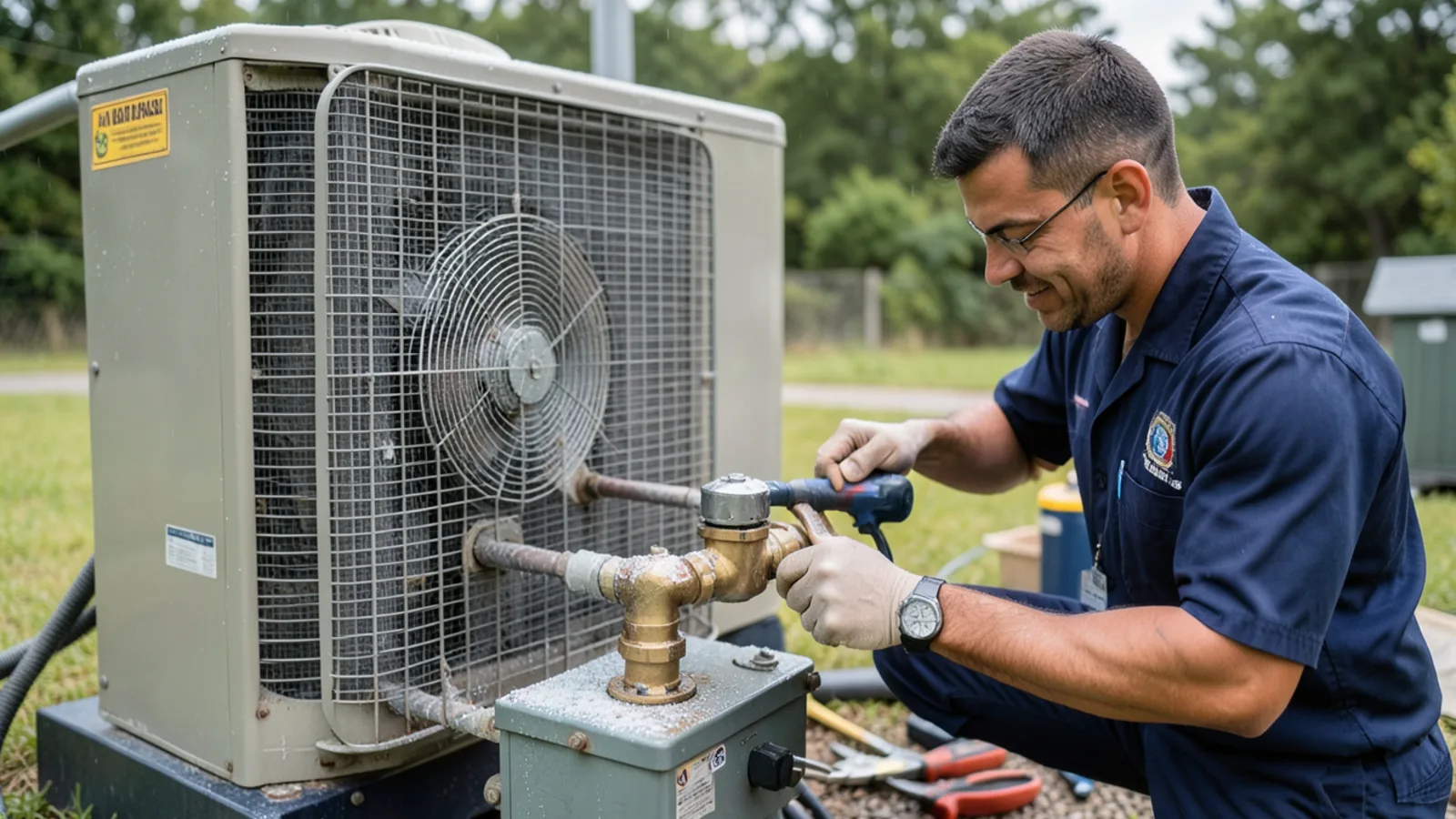
If your central AC is running continuously but blowing warm or lukewarm air during a humid Michigan summer, the most frequent culprits are a choked 1-inch furnace filter, an iced-over evaporator coil, a failed dual-run capacitor, or outdoor condenser fins choked with cottonwood fuzz. If ice is visible on copper pipes, immediately turn your thermostat to OFF and fan to ON. Call PerformanceMech at (321) 666-8870 for same-day cooling triage.
Understanding the Thermodynamics of Summer Cooling in Southeast Michigan
During July and August in Livingston, Oakland, and Washtenaw Counties, outdoor temperatures frequently climb into the high 80s and 90s accompanied by relative humidity levels exceeding 75% to 85%. In this climate, a residential central air conditioner does not merely chill the air; it serves as a whole-house dehumidifier.
Sensible Heat vs. Latent Heat Removal
Air conditioning encompasses two distinct thermodynamic workloads: sensible cooling (lowering the dry-bulb temperature shown on your thermometer) and latent cooling (condensing airborne water vapor into liquid water). On a muggy 90°F afternoon in Michigan, up to 35% to 40% of your air conditioner's total cooling capacity is expended solely on extracting pints of moisture from the air before indoor dry-bulb temperatures can begin dropping.
Why High Humidity Masks Cooling Performance
If your home's air conditioner is undersized, low on refrigerant, or experiencing reduced indoor airflow, it will struggle to satisfy both latent and sensible loads simultaneously. The system may run for 10 hours continuously, condensing gallons of water down the basement drain line, yet the indoor temperature will plateau stubbornly at 76°F or 78°F, creating a clammy, uncomfortable indoor environment.
The Air Circulation Rule: 350 to 400 CFM per Ton
To maintain proper dehumidification without coil freezing, a residential AC system requires between 350 and 400 cubic feet per minute (CFM) of airflow per ton of cooling capacity. A 3-ton system requires roughly 1,100 to 1,200 CFM of unimpeded duct airflow. Any restriction in duct returns or filtration collapses this delicate balance.
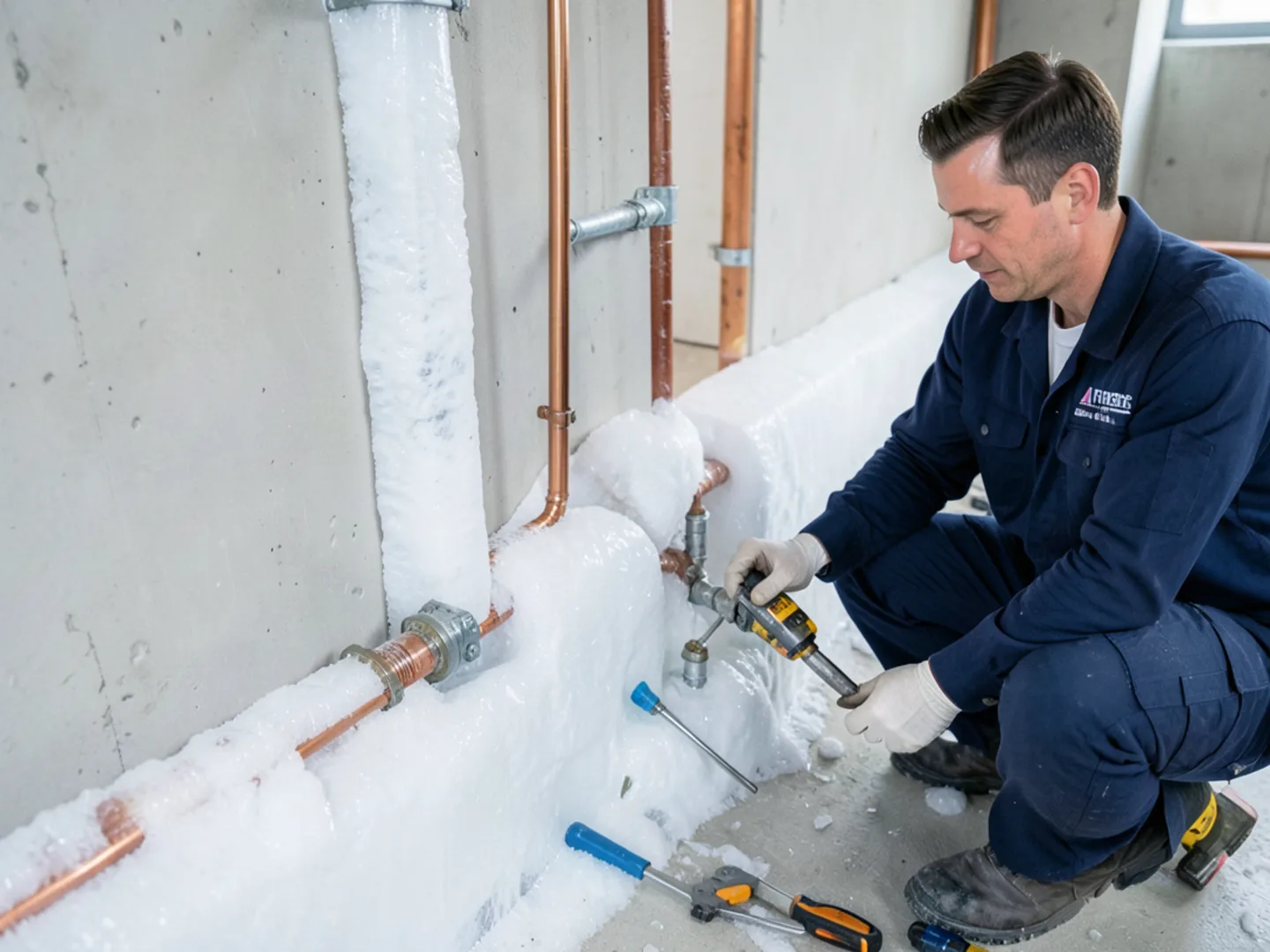
Need an Expert On Site at Your Home?
Our Brighton HVAC team provides prompt dispatch across Livingston County. Call (321) 666-8870.
Diagnostic Temperature Split: Measuring Delta-T Across Your Evaporator Coil
The single most reliable indicator of central air conditioning health is the 'Delta-T' (temperature split)—the physical difference in air temperature between the return air duct entering the furnace and the cooled supply air exiting into the duct trunk line.
How to Measure Delta-T Accurately at Home
Using a digital probe thermometer, measure the air temperature inside the main return air drop (just before the filter). Next, insert the probe into the supply plenum approximately 12 to 18 inches above the indoor evaporator coil (out of direct line-of-sight of the coil). Subtract the supply reading from the return reading after the AC has operated continuously for at least 15 minutes.
Interpreting Your Delta-T Reading
In Southeast Michigan's summer climate, a healthy, properly charged air conditioner produces a Delta-T between 16°F and 21°F. If your return air is 75°F, your supply air should register between 54°F and 59°F. If the temperature split is below 14°F, the system is suffering from low refrigerant charge, compressor valve inefficiencies, or dirty outdoor coils. If the split is higher than 22°F, indoor airflow is severely restricted, risking immediate coil freeze-up.
Why Thermostat Settings Cannot Compensate for Low Delta-T
When an AC unit produces a weak 8°F Delta-T, lowering the thermostat setting down to 65°F will not force the system to blow colder air. It merely forces the compressor to run indefinitely without stopping, driving up electric bills and overheating the compressor motor windings.
The Frozen Coil Phenomenon: Why AC Units Turn into Ice Blocks
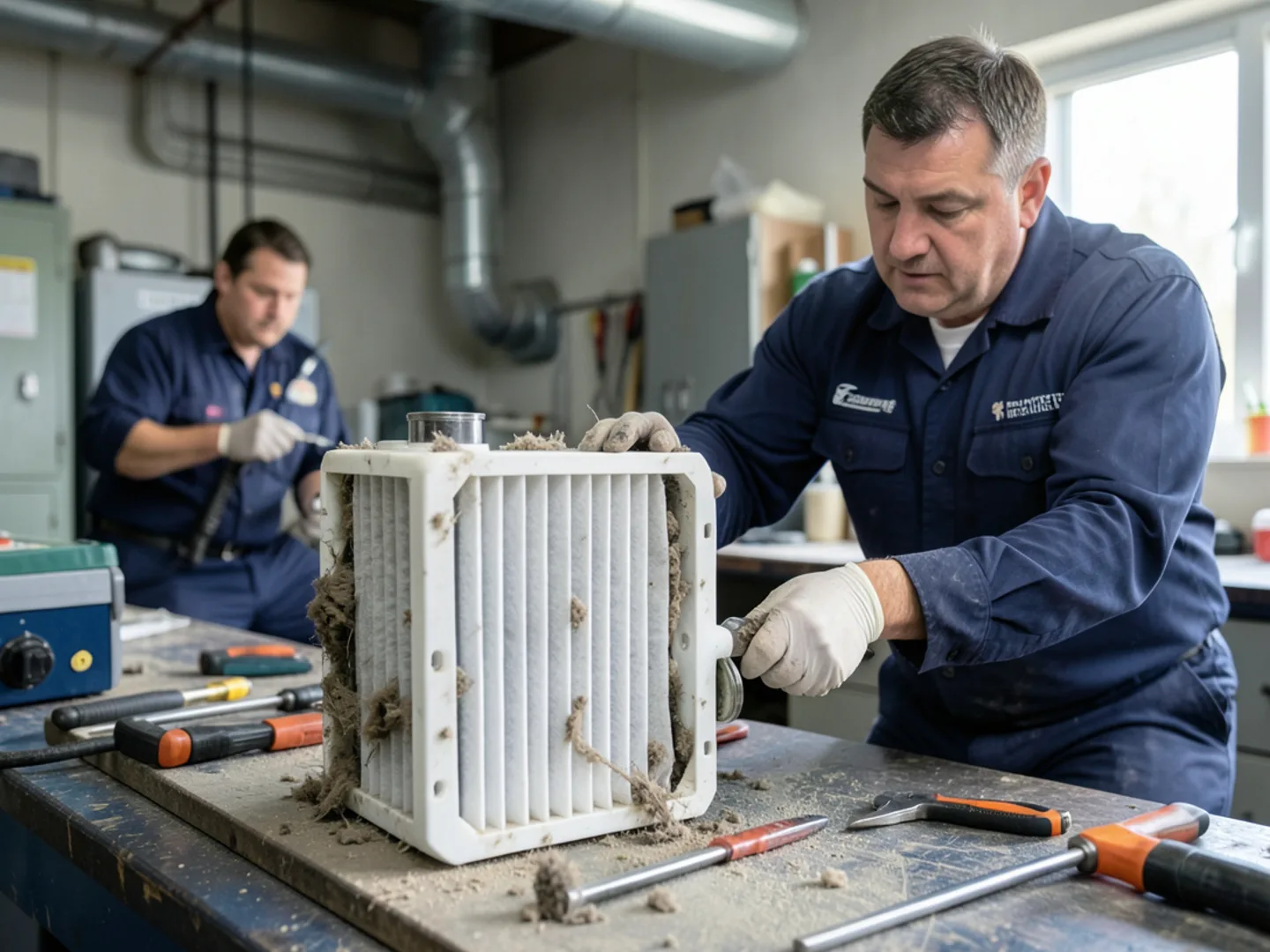
Discovering solid white frost or ice encasing your copper line set and basement furnace coil on a sweltering 90°F July day is one of the most perplexing sights for homeowners. Understanding the thermodynamic trigger explains why this occurs.
Airflow Starvation and Coil Depressurization
Under normal operation, the liquid refrigerant circulating through the indoor evaporator coil evaporates at approximately 40°F to 45°F, staying safely above the freezing point of water. However, if indoor airflow is choked by a heavily dust-laden 1-inch pleated filter, closed supply louvers, or a failing blower motor, heat cannot transfer into the refrigerant. The refrigerant pressure and boiling temperature plunge below 32°F (0°C).
The Compounding Ice Encasement Cycle
Once coil surface metal drops below 32°F, atmospheric moisture condensing out of the humid house air freezes instantly onto the aluminum fins. As a thin layer of frost forms, it blocks the narrow gaps between coil fins, further choking airflow. Within 2 to 4 hours, what began as a light frost expands into an impenetrable 2-inch-thick block of solid ice, choking airflow completely and sending liquid refrigerant back to destroy the outdoor compressor.
Refrigerant Undercharge as a Freezing Trigger
Counterintuitively, a system that is low on refrigerant (due to a pinhole leak in the copper tubing) will also freeze over. A leak lowers overall suction pressure in the evaporator coil. Lower pressure directly lowers the evaporation temperature of the remaining refrigerant below 32°F, initiating the identical freeze-up cascade.
AC Troubleshooting Decision Matrix: Symptoms, Causes, and Safe Action Steps
PerformanceMech has developed this field troubleshooting matrix to help homeowners safely diagnose common cooling malfunctions, avoid catastrophic compressor damage, and know when to call a professional.
| Observed Cooling Symptom | Likely Mechanical Cause | Immediate DIY Triage Step | Professional Repair Required | Risk if Ignored |
|---|---|---|---|---|
| Warm air blowing; outdoor unit silent | Failed dual-run capacitor or tripped breaker | Check electrical panel; DO NOT reset breaker repeatedly | Test microfarads (μF) and replace capacitor | Compressor motor overheating and permanent winding burnout |
| Lukewarm air blowing; indoor pipes covered in ice | Severe airflow starvation or low refrigerant | Turn AC system switch OFF; set Fan switch to ON | Inspect evaporator coil, test blower static, check leak charge | Water damage from melting ice; slugging liquid into compressor |
| AC runs continuously; house won't drop below 76°F | Cottonwood debris blanket on outdoor condenser fins | Clear perimeter vegetation; turn off breaker before gentle hose rinse | Chemical condenser coil foaming and fin combing | High head-pressure thermal shutdown; doubled electrical bills |
| Air is cool but house feels clammy and muggy | Oversized AC short-cycling or low blower speed | Set thermostat fan setting to AUTO (never ON in summer) | Adjust blower speed tap to 350-400 CFM/ton for moisture removal | Mold spore proliferation in ductwork; poor indoor comfort |
| Outdoor condenser buzzing loudly but fan not spinning | Seized condenser fan motor or failed start capacitor | Shut off thermostat cooling call immediately | Motor bearing lubrication or motor assembly replacement | Burnt motor stator windings and blown 240V fuses |
Electrical & Component Failures: Swollen Capacitors, Contactor Pitting, and Motor Seizure
Modern central air conditioning systems rely on high-voltage electrical components housed inside the outdoor condenser cabinet. Prolonged heat waves and summer thunderstorms in Southeast Michigan subject these parts to intense electrical and thermal stress.
Dual-Run Capacitor Deterioration
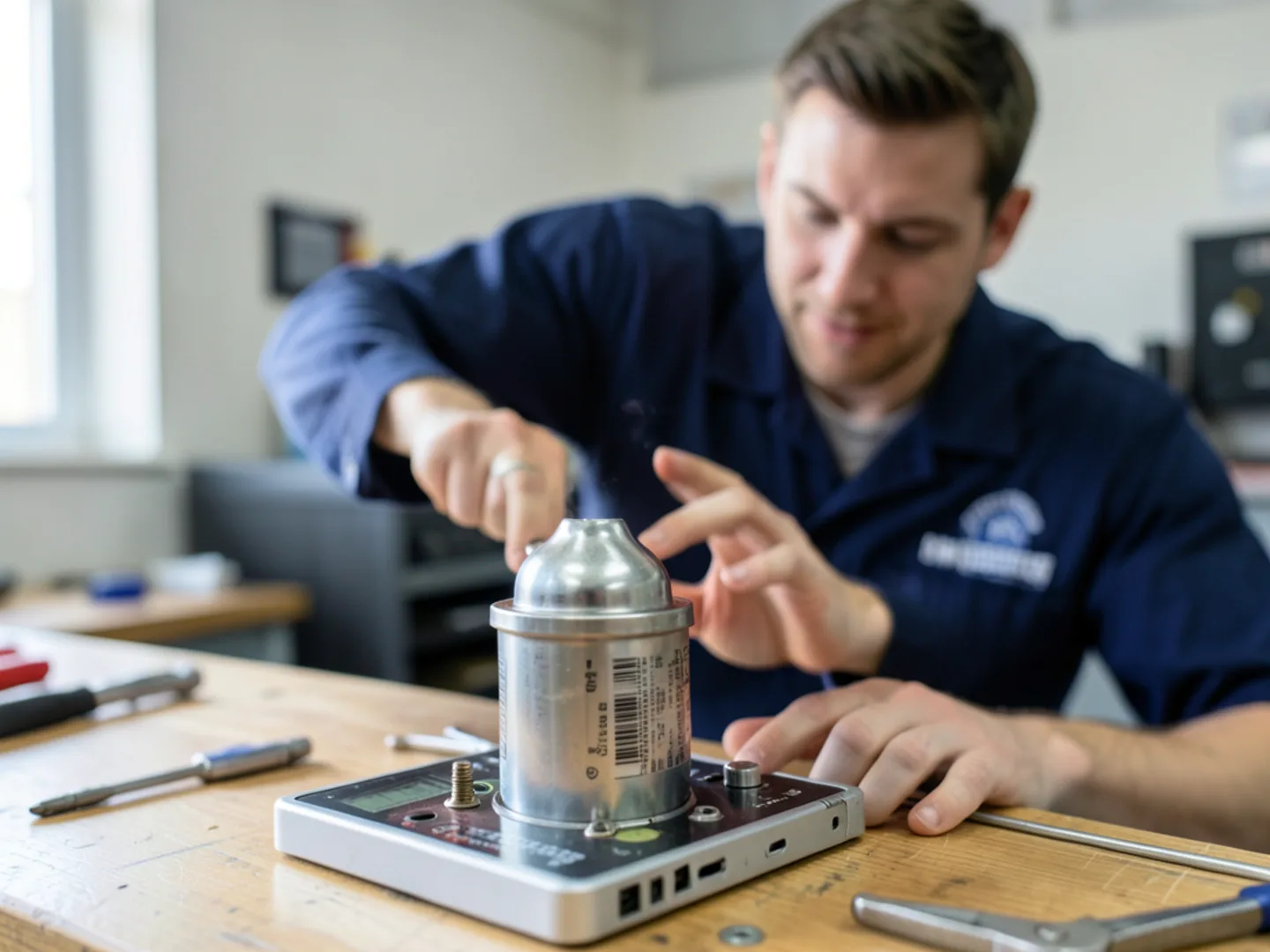
The dual-run capacitor provides the phase-shifted electrical torque necessary to start and run both the outdoor fan motor and the heavy compressor motor. Capacitors are rated in microfarads (μF) with a strict tolerance of ±5% to ±6%. When exposed to 95°F ambient heat and high internal electrical resistance, the internal dielectric fluid degrades, causing the metal canister to dome or bulge outward at the top. Once capacitance drops below operating threshold, the compressor hums loudly but cannot start.
Contactor Point Arcing and Pitting
The electrical contactor is a heavy-duty 24V magnetic relay switch that closes to send 240V power to the compressor. Each time the thermostat cycles the AC on, a small electrical arc jumps across the silver contacts. Over years of operation, contacts become blackened and pitted. Severe pitting causes contacts to weld shut (keeping the outdoor unit running non-stop even when the indoor fan turns off) or causes high electrical resistance that drops voltage and trips circuit breakers.
Condenser Fan Motor Bearing Seizure
The outdoor fan motor spins continuously in rain, dust, and blazing sunlight. Over 10 to 15 years, factory-sealed bearing lubricant breaks down. When bearings begin to drag, the motor draws excessive electrical current (high amperage) and trips its internal thermal overload switch, shutting off the fan while the compressor continues to cook itself under skyrocketing internal pressures.
Refrigerant Leaks, R-410A Pressures, and Cottonwood Condenser Choking
Beyond electrical failures, thermal rejection issues and chemical balance within the sealed copper line set account for the remainder of hot-weather cooling breakdowns.
The Cottonwood Hazard in Livingston County
From late May through early July, female cottonwood trees across Brighton, Howell, Milford, and Hamburg release billions of airborne seed fibers. The powerful condenser fan sucks this white fluff against the outdoor aluminum coil fins, weaving a dense, felt-like blanket that completely blocks outdoor heat rejection. As head pressure surges, the compressor's efficiency plummets, tripping the high-pressure safety cutout and blowing lukewarm air indoors.
Formicary Corrosion and Refrigerant Leaks
Refrigerant does not 'wear out' or get 'used up'; an air conditioning system is a permanently hermetic, sealed loop. If refrigerant is low, a physical leak exists. In modern coils, formicary corrosion caused by trace household volatile organic compounds (VOCs) creates microscopic pinhole leaks along copper bend joints. PerformanceMech technicians locate leaks using sensitive electronic halogen sniffers and ultrasonic listening probes rather than simply adding refrigerant.
The R-22 Phaseout and Transition to R-454B
For aging systems manufactured before 2010 utilizing R-22 Freon, refrigerant leaks are financially catastrophic due to the EPA production ban, with virgin R-22 exceeding $150 to $200 per pound. Even R-410A systems are now transitioning to next-generation A2L low-GWP refrigerants (R-454B). When major coil leaks strike an aging system, equipment replacement is vastly more economical than continual leak top-offs.
Field Advice on Summer Ice Melt Protocol from PerformanceMech
When an evaporator coil freezes into a solid block of ice, many homeowners call us asking for an immediate refrigerant 'top-off'. But if a technician arrives while the coil is an iceberg, we cannot perform accurate digital manifold diagnostics or measure subcooling and superheat. The system must thaw completely first. If you see ice on the copper suction line at your furnace, do not use hair dryers or ice picks—you will puncture the paper-thin aluminum coil fins. Switch the thermostat cooling switch to OFF and flip the fan switch from AUTO to ON. Place towels around the furnace base. This circulates warm room air across the coil, melting it safely within 4 to 8 hours so our technician can immediately diagnose the underlying cause upon arrival.
Frequently Asked Questions
Common questions Michigan homeowners ask our technicians regarding this topic.
When an AC runs continuously without cooling, the most common causes are a choked 1-inch furnace filter starving airflow, an iced-over evaporator coil, outdoor condenser coils clogged with cottonwood fluff, or a failed dual-run capacitor preventing the outdoor compressor from operating while the fan spins.
PerformanceMech Technical Team
Licensed Michigan Mechanical & Hydronic Specialists serving Livingston, Oakland & Washtenaw Counties.
Related Professional Services
Related Service Areas Covered
Have Heating or Cooling Trouble Today?
Call PerformanceMech Heating & Air at (321) 666-8870. Live phone response and rapid dispatch from our Brighton hub.